Opel Astra Hatch, J
A heavier, better-built Astra that drives well enough and sells for a fraction of a comparable Golf.
Overview
The J is the hatchback Opel Astra, built 2009–2015 and facelifted in 2012. 2 standard engines are documented here, each with its own issue list, inspection sequence and price band. Asking prices across the standard range run €850–€3,400, and 0 of the 2 carry a risk level of 4 or 5; the facelift cars sit at a premium over otherwise identical pre-facelift ones. The 1.6 A16XER is both the cheapest way in, from €1,200, and the lowest-risk engine of the range, which makes it the obvious starting point. Prices are illustrative placeholders rather than a sourced market sample. See the methodology.
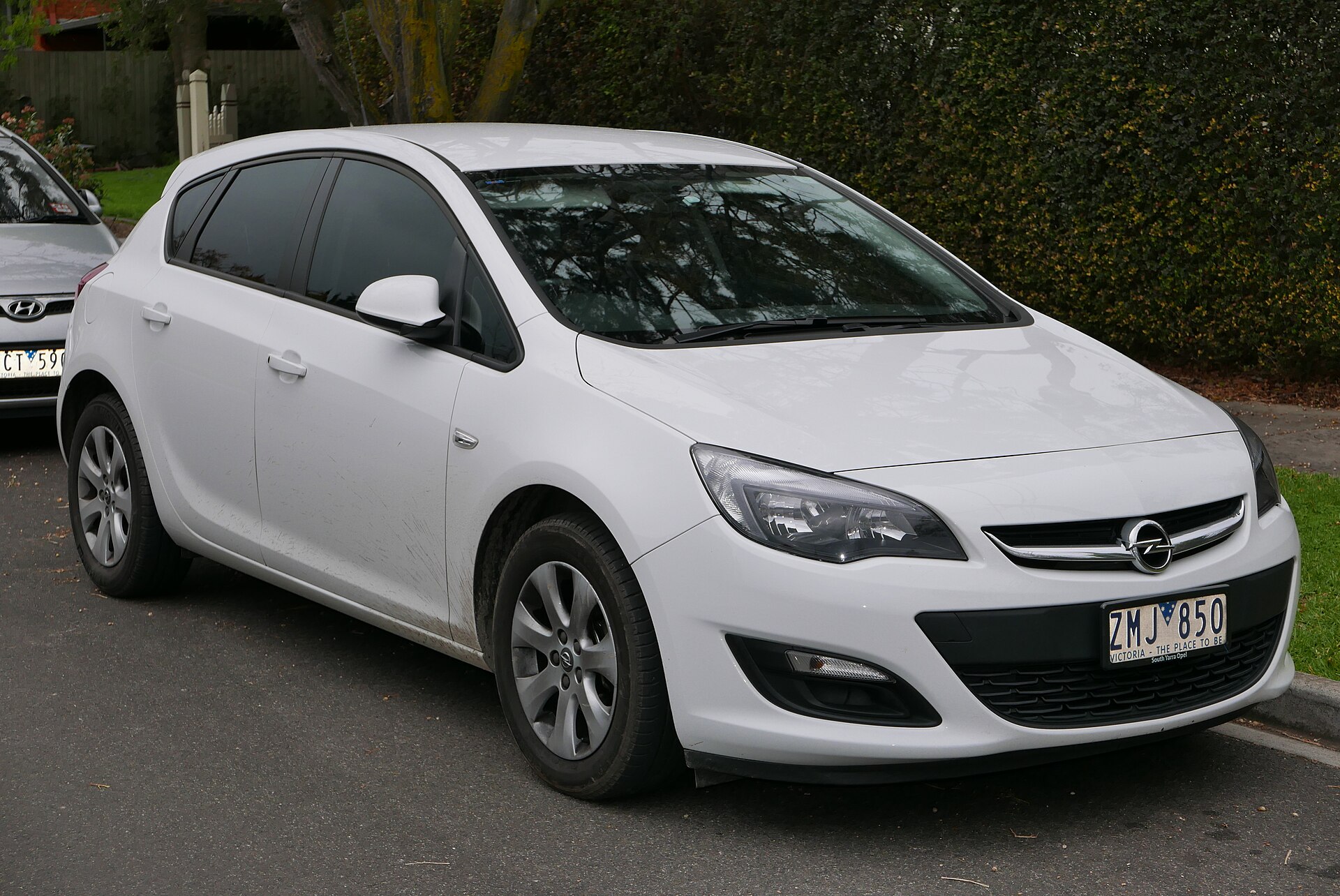
Opel Astra hatchback (J) · photo 2012 Opel Astra (AS) 1.4 Turbo 5-door hatchback (2015-07-10) 01 by OSX · Public domain · Wikimedia Commons
| Body style | hatchback | Production | 2009–2015 |
| Platform siblings | J Sports Tourer wagon | Facelift (LCI) | 2012 |
Engine matrix: pre-facelift, 2009–2011
The 2 variants sold before the 2012 facelift. Power and years come from the variant records; prices are illustrative, not sourced.
Engine matrix: facelift / LCI, 2012–2015
The 2 variants sold from the facelift on, priced at a 9% premium over the pre-facelift car.
2 variants from the facelift on, carrying a real market premium of roughly 9% over an otherwise identical pre-facelift car. Variants appearing in both tables were sold either side of the changeover, the build month decides which one you're looking at, not the model year.
Market availability varied by country; check the engine code stamped on the block rather than the badge on the boot. · Compare every engine side by side →
Model-year availability
Which engines were on sale in which year, from the year ranges in the variant records. Availability varied by country.
Rating map, price against risk
Good-buy price plotted against risk level for every standard engine, so the value corner is visible at a glance.
Every standard engine in the chassis, plotted at its good-buy price against its risk level. Cheap and low-risk is the top-left; expensive and fragile is the bottom-right. M cars are excluded, they would stretch the price axis and tell you nothing about the rest.
Prices across the range
Where the money sits across the whole chassis. Every figure here is an illustrative placeholder, not a sourced market sample.
Every standard engine on one euro axis: the bar spans the 10th to 90th percentile of asking prices, the tick is the median and the green marker is the good-buy figure. OPC cars are excluded; they sit an order of magnitude above the rest.
Every standard engine · cheapest first · 1.6 A16XER highlighted as best value
at or under the good buy · good buy · median · bar spans the 10th–90th percentile
Chassis-wide issues, every engine inherits these
Faults recorded against the bodyshell and running gear rather than one engine, so every variant on this page inherits them.
Written once against the chassis and shown on every variant page below, so nothing here is repeated 2 times: OPC cars included, since the bodyshell and electronics are shared.
Buying summary
Our read on the chassis, built on the records above rather than added to them.
Best value: 2.0 CDTI, the same engine as the Insignia and with the same timing-chain and filter questions. The 1.6 petrol is the low-risk choice for low mileage, with nothing serious recorded against it. The car is heavy for its class, so the suspension bushes and the front tyres wear faster than you'd expect. So buy on history and on how it has been used.
Cheapest and dearest in this chassis
The ends of the range by good-buy price. Useful for sanity-checking anything you're quoted.