320i N43

Lean-burn direct-injection four. Economical when healthy and expensive when not. The injectors and NOx sensors are the whole story.

Overview

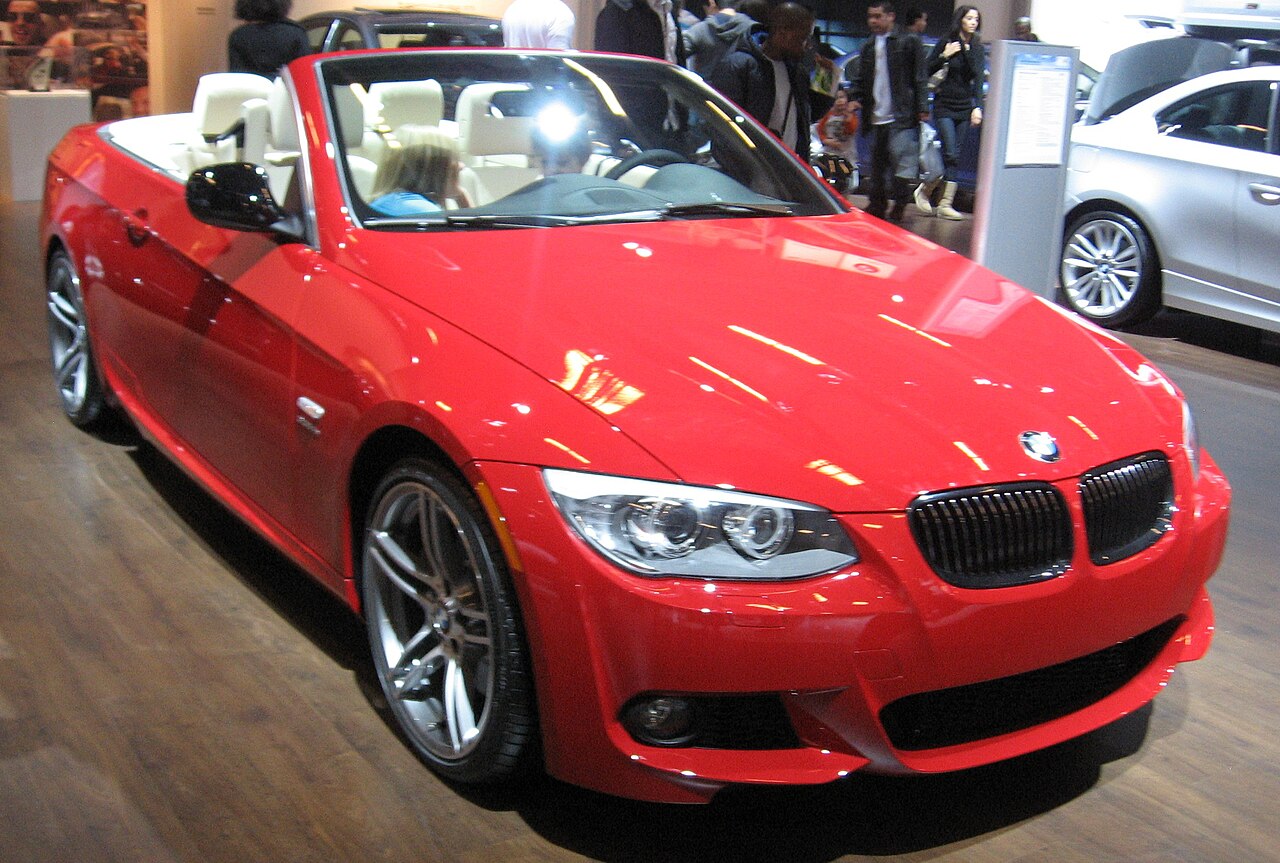
The 320i is the N43 petrol version of the BMW 3 Series convertible (E93), sold 2007–2011 with 170 PS and manual or automatic. High risk at level 4. Piezo injectors and NOx sensors both fail, both are expensive relative to the car's value, and a full set of injectors costs more than many of these cars are worth. 18 failure modes are recorded against its engine, gearbox, chassis and shared components. Prices on this page are illustrative placeholders rather than a sourced market sample. See the methodology for how the bands are derived.
Power170 PS
Torque210 Nm
Years2007–2011
Fuelpetrol
DriveRWD
EnginesN43
Biggest risks

Ranked by probability × repair cost. 18 recorded in total.

41Fragile
  1. "Lifetime" fluid neglect€400€2,500partly checkable
  2. Dual-mass flywheel and clutch wear€900€1,600checkable
  3. Carbon buildup on intake valves€400€700not checkable

Risk level −33 · Likely spend vs price −26 · all issues →

System by system9 systems reviewed · 0 with no recurring fault reported

Pre-facelift or facelift, this engine spans both

The same badge either side of the changeover. Bands are split at the facelift year from the generation record.

PhaseYearsLowAverageHighGood buyWhat differs
pre Pre-facelift2007–2009€3,700€5,150€7,400€4,450The specification the car launched with.
LCI Facelift (LCI)2010–2011€4,050€5,600€8,050€4,850N55 replaced the N54 in the 335i; N57 replaced M57 in the six-cylinder diesels; Revised lights, bumpers and iDrive

Known issues, ranked by expected cost

Faults recorded against this engine, its components and its chassis, ranked by likelihood × repair cost. Costs are indicative ranges with a stated labour basis.

"Lifetime" fluid neglectZF 6HP19 / 6HP21 six-speed automatic€400–€2,500
Harsh or hunting shifts, a shunt between second and third, delayed engagement when cold. BMW declared the fluid a lifetime fill. It's not. Fluid degrades, the valve body wears, and the box eventually fails.
Check: Drive it from cold through every gear, then in manual mode. Ask when the fluid was last changed. "It's sealed for life" means never, and you should price a service in.
TransmissioncommonPartly detectableevidence: documented120200k km
Dual-mass flywheel and clutch wearGetrag six-speed manual€900–€1,600
Rattle at idle with the clutch up that disappears when you press it, judder on pull-away, gearbox rumble. The dual-mass flywheel's springs wear. Diesels and tuned petrols wear them faster.
Check: Idle in neutral with the clutch up and listen, then press the clutch. A rattle that stops when you press is the flywheel. Also check for judder pulling away in first.
TransmissioncommonDetectable at viewingevidence: documented130250k km
Carbon buildup on intake valvesdirect injection€400–€700
Rough cold idle, slow throttle response, misfires, gradual loss of low-end response. Direct injection puts no fuel over the intake valves, so crankcase vapour deposits bake on undisturbed.
Check: Not visible without a borescope. Treat it as a service item that's due unless there's a receipt. It's not a fault, it's an unbudgeted maintenance cost.
Turbo & intakeuniversalNot detectable at viewingevidence: documented80120k km
Timing chain tensioner rattleN43B20€300–€1,400
Rattle for one to three seconds on cold start, worst after the car has stood overnight. The hydraulic tensioner bleeds down. Caught early it's a tensioner; ignored it becomes chain and guides.
Check: The car must be stone cold. Stand outside it at start-up and listen for a rattle from the front of the engine.
EnginecommonDetectable at viewingevidence: documented100180k km
Front control arm bushing wearE9x chassis€300–€700
Knocking over bad surfaces, vague or wandering steering, uneven front tyre wear, steering shimmy under braking. The front lower arm bushings are a known wear item on this chassis and go well before the ball joints.
Check: Drive over a rough road at low speed with the windows down and listen. Check the inside edges of the front tyres for feathering.
SuspensionuniversalDetectable at viewingevidence: documented80150k km
The roof stops mid-cycle, refuses to operate, or throws a roof warning; hydraulic fluid weeping in the boot. Microswitches, hydraulic rams and the boot-floor mechanism all wear. A roof stuck half-open isn't a drivable car.
Check: Cycle the roof fully open and fully closed at least twice, watching for hesitation, and check the boot for fluid. A seller who won't demonstrate the roof is telling you it's broken.
ElectricaloccasionalDetectable at viewingevidence: documented
Harsh ride, vibration at speed, slow punctures. Stiff-sidewall run-flats transmit impacts straight into the rim, and these alloys crack rather than bend.
Check: Inspect the inner rim edge of every wheel for cracks and hairline splits, not just the face for kerbing. Budget for a set of conventional tyres; most owners switch and the ride improves markedly.
SuspensioncommonDetectable at viewingevidence: documented
Water in the boot or rear footwells, damp smell, corroded connectors under the carpet. The convertible's drain channels block, and the water goes into the car.
Check: Lift the boot carpet and the spare wheel cover, and press the rear footwell carpets with your palm. Damp here on a convertible is the start of an electrical problem, not the end of a cosmetic one.
Body & corrosioncommonDetectable at viewingevidence: documented

Ranked by probability × repair cost, not by how loudly a failure is discussed. Inherited from the engine, gearbox, chassis and shared components, each written once. All 18 issues in full →

Pre-purchase inspection

The same issue records, reordered into the sequence you can actually check them in: cold start, static, drive, paperwork.

18 checks · saved in this browser ·

1Cold startYou get one. If the engine is warm when you arrive, come back another day.

2Static checksEngine off, ideally on a lift.

3On the driveInclude low-speed manoeuvring, not just an open road.

4PaperworkOn these cars the folder is most of the value.

5OBD scanMandatory. A seller who refuses a scan has answered the question.

Mileage and servicing

What the odometer does and doesn't tell you here, plus the service items whose neglect causes the expensive failures above.

Ignore the odometer and count the injector receipts. Six injectors at €350–500 each is €2,000–3,000 on a car worth €5,000, so the only versions of this car worth buying are the ones where a previous owner has already paid that bill. Short-trip cars fare worst.

Service itemIntervalCost
Injector history
The single item that determines whether this car is cheap or ruinous
check before purchase€350–500 each
Spark plugs and coils
Misfires get blamed on injectors when the plugs are the cause
40,000–50,000 km€200–350
Engine oil
Chain tensioner wear follows oil condition
10,000–12,000 km€90–140

What to pay

What this engine sells for, against the median of every engine in the chassis. All figures are illustrative placeholders. See the basis chips.

Enter an asking price to get a verdict against this variant's band: cheap, fair, good buy or overpriced.

United States vs Europe

1 EUR = 1.08 USD ·
🇪🇺 Europe · EUR€4,450band €3,700€8,050
🇺🇸 United StatesNot sold320i N43 was never a US-market car
What that meansNo US band exists to compare. Any car you find there's a private import, parts and specialist knowledge are thinner, and the price says more about import cost than about the market.

US figures are the EU band converted at a stated rate. No US market differential is modelled: we hold no sourced US asking prices, and inventing one would be worse than saying so. What the comparison does show for real is availability. Most of this range was never sold in the US.

  • ModelBMW 3 Series 320i
  • ChassisE93
  • EngineN43
  • Years2007–2011
  • MarketCentral EU
  • Windowrolling 12 months to 2026-07
€4k€6k€8kE93 median, all 11 engines €7,750Pre-faceliftPre-facelift: low €3,700, good buy €4,450, average €5,150, high €7,400€5,150€3,700€7,400€4,450Facelift (LCI)Facelift (LCI): low €4,050, good buy €4,850, average €5,600, high €8,050€5,600€4,050€8,050€4,850
Good buy at or under the marker · Median asking price · bar spans the 10th to 90th percentile · dashed line is the e93 median, all 11 engines

Good buy isn't the same as cheapest. The good-buy figure assumes the known failure items are either done with receipts or verifiably not yet due. Full breakdown by facelift phase →

Buyer notes

Our judgement, kept separate from the records it's built on.

Our read, not a record
This is the trap of the four-cylinder petrol range. On paper it's the sensible one: 170 PS, no turbo, decent economy, cheap tax. Yet in practice the lean-burn fuel system is fragile, and once injectors start failing they tend to keep going one at a time. Shops know it and quote accordingly. If you find one with all six injectors and the NOx sensors replaced recently, with receipts, it's a genuinely good car and worth paying a premium for. Without that paperwork, assume you're buying the repair bill. The N46 that preceded it and the six-cylinder N52 are both less exposed.

Everything above this line comes from the issue and specification records. This paragraph is our judgement on top of them. See how we reach it.

Full specification

Manufacturer figures for this engine and body, as recorded in the variant and engine data.

Engine codeN43B20
ConfigurationI4, naturally aspirated, lean-burn · 1995 cc
Fuel / injectionpetrol · direct
Model years2007–2011
Facelift phaseSold either side of the 2010 facelift, 2007–2009 pre, 2010–2011 LCI
Power / torque170 PS · 210 Nm
Transmissions6-speed manual · 6-speed automatic (ZF)
Gearbox familiesGetrag six-speed manual · ZF 6HP19 / 6HP21 six-speed automatic
DrivetrainRWD
Economy (real-world)7.5–9 l/100 km mixed
MarketsEU