Volkswagen Golf Mk5, Mk5

The generation that made the Golf feel expensive again, and now the cheapest way into a modern one. Rides and steers better than its price suggests; the risk is entirely in which engine and gearbox it left the factory with.

Overview

The Mk5 is the hatchback Volkswagen Golf, built 2003–2009. 3 standard engines are documented here, each with its own issue list, inspection sequence and price band. Asking prices across the standard range run €1,400–€7,000, and 1 of the 3 carry a risk level of 4 or 5. The cheapest way in is the 1.9 TDI BKC from €2,000, while the 1.9 TDI BKC is the lowest-risk engine at €2,000, which engine you buy matters more here than which year. Prices are illustrative placeholders rather than a sourced market sample. See the methodology.
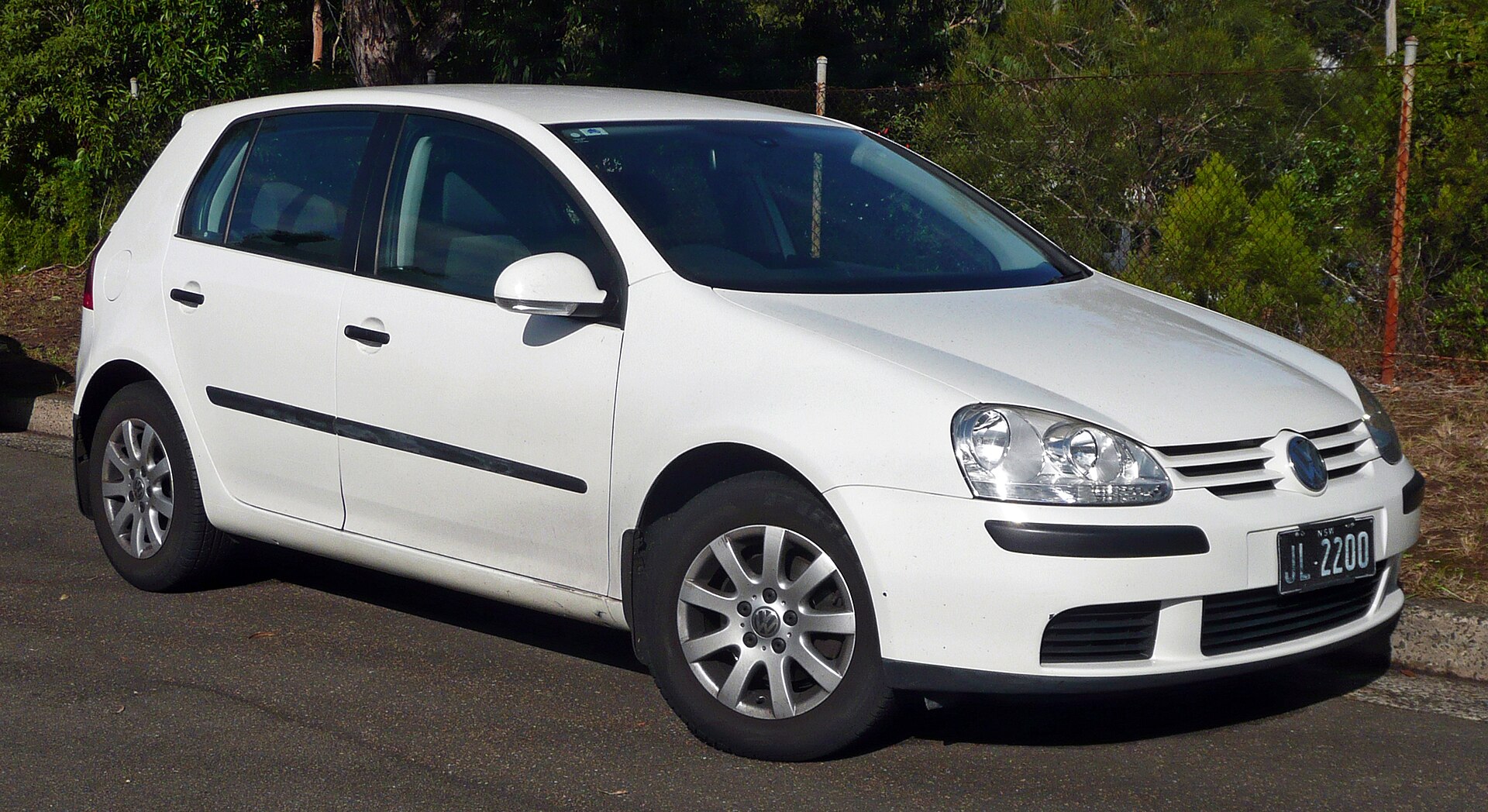
Body stylehatchbackProduction2003–2009
Platform siblingsMk6 hatchbackFacelift (LCI)none

Engine matrix: pre-facelift, 20032009

The 3 variants sold before the 2010 facelift. Power and years come from the variant records; prices are illustrative, not sourced.

3 of 3
BadgeEngineFuelYearsPowerTorqueRiskIssuesPrice bandGood buyVerdict
1.9 TDIBKCdiesel20032009105 PS250 NmR211€1,400€4,400€2,000Strong buyView
1.4 TSICAXApetrol20072009122 PS200 NmR413€2,400€7,000€3,300CautionView
2.0 FSIBLRpetrol20042008150 PS200 NmR311€1,800€5,200€2,450Buy w/ conditionsView

Engine matrix: facelift / LCI, 20102009

The 0 variants sold from the facelift on, priced at a 9% premium over the pre-facelift car.

0 variants from the facelift on, carrying a real market premium of roughly 9% over an otherwise identical pre-facelift car. Variants appearing in both tables were sold either side of the changeover, the build month decides which one you're looking at, not the model year.

0 of 0

Nothing matches those filters.

Market availability varied by country; check the engine code stamped on the block rather than the badge on the boot. · Compare every engine side by side →

Model-year availability

Which engines were on sale in which year, from the year ranges in the variant records. Availability varied by country.

Variant03040506070809
1.9 TDI BKC
1.4 TSI CAXA
2.0 FSI BLR

● full year · arrives or leaves mid-generation. Years from 2010 in the accent colour are facelift (LCI) cars. Verify the engine code, not the model year.

Rating map, price against risk

Good-buy price plotted against risk level for every standard engine, so the value corner is visible at a glance.

Every standard engine in the chassis, plotted at its good-buy price against its risk level. Cheap and low-risk is the top-left; expensive and fragile is the bottom-right. M cars are excluded, they would stretch the price axis and tell you nothing about the rest.

cheap · low risk€2k€2.5k€3kR1R2R3R4R5good-buy price →risk ↓1.9 TDI BKC: Strong buy, risk 2, good buy €2,0001.9 TDI2.0 FSI BLR: Buy with conditions, risk 3, good buy €2,4502.0 FSI1.4 TSI CAXA: Caution, risk 4, good buy €3,3001.4 TSI
Buy / strong buy Buy with conditions Caution / avoidLeft is cheaper, up is safer. The top-left corner is where the value is.

Prices across the range

Where the money sits across the whole chassis. Every figure here is an illustrative placeholder, not a sourced market sample.

Every standard engine on one euro axis: the bar spans the 10th to 90th percentile of asking prices, the tick is the median and the green marker is the good-buy figure. GTI/R cars are excluded; they sit an order of magnitude above the rest.

Cheapest good buy€2,0001.9 TDI BKC
Median good buy€2,450across 3 engines
Dearest good buy€3,3001.4 TSI CAXA
Full range€1,400€7,000P10 to P90

Every standard engine · cheapest first · 1.9 TDI BKC highlighted as best value

€2k€4k€6kGood buy
1.9 TDI BKC€2,0002.0 FSI BLR€2,4501.4 TSI CAXA€3,300

at or under the good buy · good buy · median · bar spans the 10th–90th percentile

Chassis-wide issues, every engine inherits these

Faults recorded against the bodyshell and running gear rather than one engine, so every variant on this page inherits them.

Front control arm bushing wearE9x chassis€300–€700
Knocking over bad surfaces, vague or wandering steering, uneven front tyre wear, steering shimmy under braking. The front lower arm bushings are a known wear item on this chassis and go well before the ball joints.
Check: Drive over a rough road at low speed with the windows down and listen. Check the inside edges of the front tyres for feathering.
SuspensionuniversalDetectable at viewingevidence: documented80150k km
Harsh ride, vibration at speed, slow punctures. Stiff-sidewall run-flats transmit impacts straight into the rim, and these alloys crack rather than bend.
Check: Inspect the inner rim edge of every wheel for cracks and hairline splits, not just the face for kerbing. Budget for a set of conventional tyres; most owners switch and the ride improves markedly.
SuspensioncommonDetectable at viewingevidence: documented
Bubbling at the rear arch lip, scaling on subframe mounting points and rear suspension components. Age plus road salt. This generation isn't a notorious rotter, but nothing from 2005–2013 is immune in a salted market.
Check: Put it on a lift and look at the rear subframe mounting points and the arch lips from behind. Largely a non-issue on cars from southern Europe, a real one on northern and Baltic cars.
Body & corrosionoccasionalDetectable at viewingevidence: documented
Footwell module (FRM) failureE9x chassis€150–€700
Headlights, indicators, windows, wipers and central locking stop working at once, usually right after a battery change or a jump start. The module's memory corrupts when supply voltage dips. It is the single most common electrical failure on this generation.
Check: Test every window, both mirrors, the wipers, all exterior lights and the central locking before you drive. If any cluster of these is dead, this is why.
ElectricalcommonDetectable at viewingevidence: documented
Rear shock mount wearE9x chassis€250–€500
Knock from the rear over speed bumps, a hollow thump from the boot area. The rubber mounts perish. On hard-used cars the mount can crack the surrounding turret metal, which is a far bigger job.
Check: Lift the boot floor and look at the top of the shock towers for cracking or a lifted mount. Listen for a knock over bumps.
SuspensioncommonDetectable at viewingevidence: documented100180k km
xDrive transfer case actuator failureE9x chassis€600–€1,200
Grinding or binding at low-speed full lock, 4x4 warning lights, a shudder when manoeuvring. The actuator motor and the transfer case's internal chain wear, especially on cars run with mismatched tyre sizes.
Check: Full-lock circles in both directions in a car park, slowly, listening for binding. Check all four tyres are the same brand and wear, mismatched tyres destroy these.
DrivetrainoccasionalDetectable at viewingevidence: documented120220k km
iDrive CCC head unit failureE9x chassis€300–€900
Black screen, rebooting, refusal to read the drive, non-functioning navigation. The early CCC unit's hard drive and mainboard fail with age. Later CIC units are more reliable.
Check: Turn it on and use it for a few minutes: navigation, radio, settings. Reboots during that window are the fault showing itself.
ElectricaloccasionalDetectable at viewingevidence: documented
Coolant expansion tank crackingE9x chassis€120–€250
Coolant smell after a drive, slow unexplained loss of coolant, crusty residue around the tank seams. The plastic tank goes brittle with age and splits, usually at a seam or around the level sensor.
Check: Look at the tank with the engine warm, dried coolant leaves a white or pink crust. Cheap to fix, but it tells you how the car has been maintained.
CoolingcommonDetectable at viewingevidence: documented90200k km
Unregistered replacement batteryE9x chassis€30–€60
Random electrical faults, warning lights that come and go, a battery that dies again within a year. The car's power management must be told a new battery was fitted. Cheap replacements are routinely fitted without coding, which then overcharges or undercharges the new battery.
Check: Ask when the battery was changed and whether it was registered. A car with a new battery, no registration and a scatter of odd electrical faults usually just needs coding.
ElectricalcommonPartly detectableevidence: documented

Written once against the chassis and shown on every variant page below, so nothing here is repeated 3 times: GTI/R cars included, since the bodyshell and electronics are shared.

Buying summary

Our read on the chassis, built on the records above rather than added to them.

Buy on drivetrain, not on trim or mileage. The 1.9 PD TDI is the durable choice and the one to look for; the 2.0 FSI and early TSI petrols carry chain and injection problems that cost more than the car is worth. A DSG with no fluid history is a gamble at this price point.

Cheapest and dearest in this chassis

The ends of the range by good-buy price. Useful for sanity-checking anything you're quoted.

Lowest entry price

1.9 TDI BKC : from €1,400, risk 2

2.0 FSI BLR : from €1,800, risk 3

1.4 TSI CAXA : from €2,400, risk 4

Lowest risk

1.9 TDI BKC : risk 2, good buy at €2,000

2.0 FSI BLR : risk 3, good buy at €2,450

1.4 TSI CAXA : risk 4, good buy at €3,300