1.8 TFSI CABB

The entry petrol. Same EA888 architecture and the same chain tensioner risk as the 2.0, with less performance to show for it.

Overview

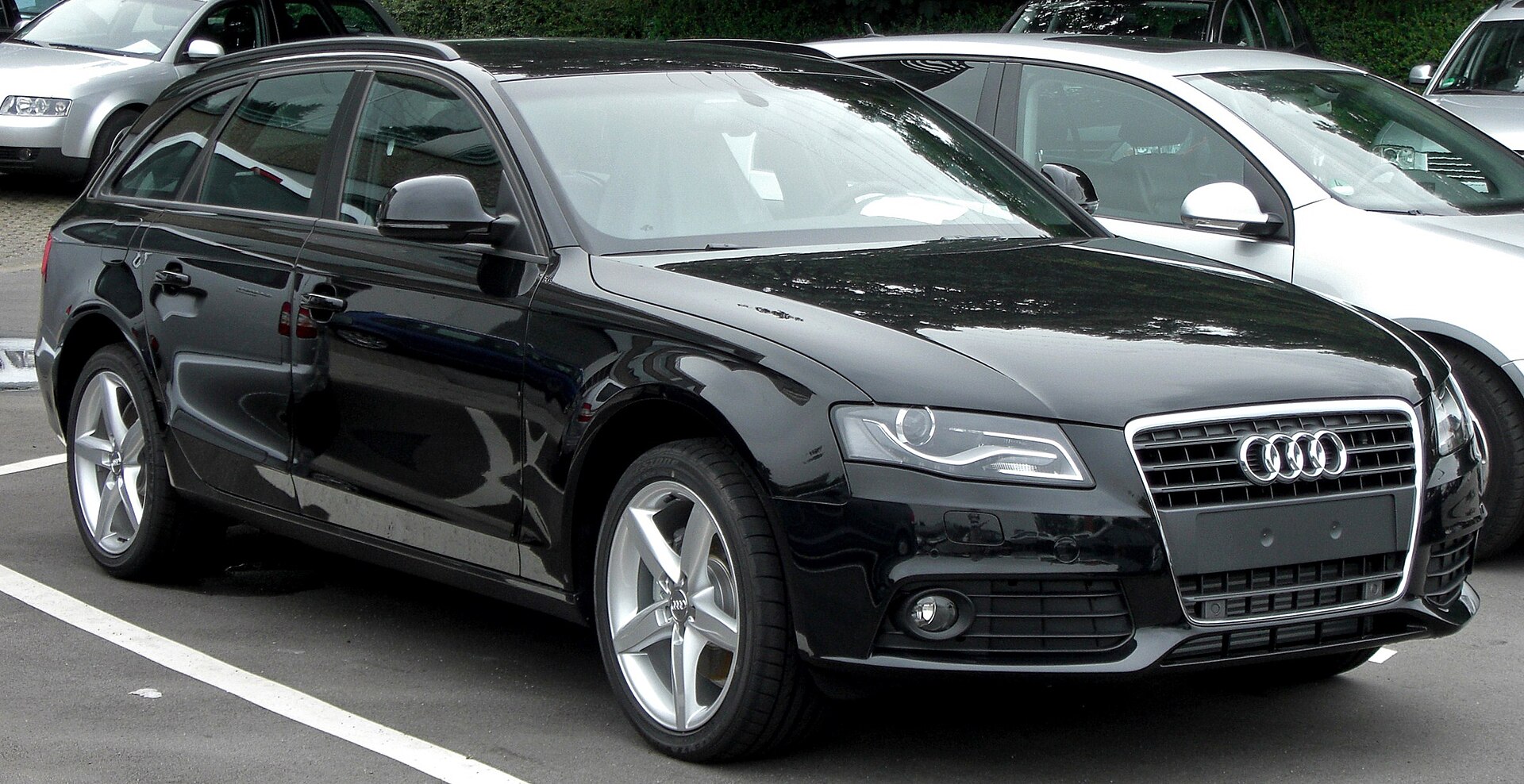
The 1.8 TFSI is the CABB petrol version of the Audi A4 wagon (B8 Avant), sold 2008–2015 with 160 PS and manual or automatic. High risk at level 4. Same EA888 chain tensioner risk as the 2.0 with less performance to justify the repair bill. 12 failure modes are recorded against its engine, gearbox, chassis and shared components, 2 of which are walk-away items without documented proof. Prices on this page are illustrative placeholders rather than a sourced market sample. See the methodology for how the bands are derived.
Power160 PS
Torque250 Nm
Years2008–2015
Fuelpetrol
DriveFWD
EnginesCABB
Biggest risks

Ranked by probability × repair cost. 12 recorded in total.

17High risk
  1. Multitronic CVT failure€1,800€4,000partly checkablewalk away
  2. Timing chain tensioner failure€900€1,800checkablewalk away
  3. Carbon buildup on intake valves€400€700not checkable

Risk level −33 · Walk-away failures −24 · Likely spend vs price −26 · all issues →

System by system9 systems reviewed · 2 with no recurring fault reported
Fuel system✓ clearNo recurring fault reported for this system on this engine.
Emissions✓ clearNo recurring fault reported for this system on this engine.
Transmission⚠ attentionMultitronic CVT failure, €1,800–€4,000. Walk away without proof.+1 more in this system
ElectricswatchFootwell module (FRM) failure, €150–€700.+2 more in this system
Suspension & brakeswatchFront control arm bushing wear, €300–€700.+2 more in this system

Pre-facelift or facelift, this engine spans both

The same badge either side of the changeover. Bands are split at the facelift year from the generation record.

PhaseYearsLowAverageHighGood buyWhat differs
pre Pre-facelift2008–2011€3,050€5,150€8,000€4,100The specification the car launched with.
LCI Facelift (LCI)2012–2015€3,300€5,600€8,700€4,450Revised grille, lights and bumpers (B8.5); EA888 gen-3 replaced gen-2 in the 2.0 TFSI; Eight-speed multitronic replaced the earlier CVT on front-drive cars

Known issues, ranked by expected cost

Faults recorded against this engine, its components and its chassis, ranked by likelihood × repair cost. Costs are indicative ranges with a stated labour basis.

Multitronic CVT failure0AW-MULTITRONIC€1,800–€4,000
Juddering when pulling away, hesitation, slipping under load, limp mode, or a whine that rises with road speed. The chain-and-pulley CVT wears, and the mechatronic unit and clutch pack fail. Fluid condition drives it and the fluid isn't lifetime, whatever the book says.
Check: Drive from cold in traffic, then accelerate hard from a standstill. Any judder, hesitation or flare is a walk-away. Ask when the fluid was last changed, 'never' or 'it's sealed' prices in a gearbox.
TransmissioncommonPartly detectablewalk away without proofevidence: documented120220k km
Timing chain tensioner failureea888-chain-tensioner€900–€1,800
Rattle for a second or two on cold start, chain noise from the back of the engine, timing correlation faults, or no start after the car has stood. The early hydraulic tensioner can lose tension and allow the chain to jump. The chain is at the gearbox end of the engine, so access is poor and a failure usually bends valves.
Check: Insist on a stone-cold start and stand at the bulkhead end of the engine. Any rattle beyond the first half-second is this until proven otherwise. Ask for a tensioner receipt with the part number. The revised part is the fix, not the mileage.
Later parts: Revised tensioner part number; fitted from later production
EnginecommonDetectable at viewingwalk away without proofevidence: documented60180k km
Carbon buildup on intake valvesdirect injection€400–€700
Rough cold idle, slow throttle response, misfires, gradual loss of low-end response. Direct injection puts no fuel over the intake valves, so crankcase vapour deposits bake on undisturbed.
Check: Not visible without a borescope. Treat it as a service item that's due unless there's a receipt. It's not a fault, it's an unbudgeted maintenance cost.
Turbo & intakeuniversalNot detectable at viewingevidence: documented80120k km
Front control arm bushing wearE9x chassis€300–€700
Knocking over bad surfaces, vague or wandering steering, uneven front tyre wear, steering shimmy under braking. The front lower arm bushings are a known wear item on this chassis and go well before the ball joints.
Check: Drive over a rough road at low speed with the windows down and listen. Check the inside edges of the front tyres for feathering.
SuspensionuniversalDetectable at viewingevidence: documented80150k km
Harsh ride, vibration at speed, slow punctures. Stiff-sidewall run-flats transmit impacts straight into the rim, and these alloys crack rather than bend.
Check: Inspect the inner rim edge of every wheel for cracks and hairline splits, not just the face for kerbing. Budget for a set of conventional tyres; most owners switch and the ride improves markedly.
SuspensioncommonDetectable at viewingevidence: documented
Bubbling at the rear arch lip, scaling on subframe mounting points and rear suspension components. Age plus road salt. This generation isn't a notorious rotter, but nothing from 2005–2013 is immune in a salted market.
Check: Put it on a lift and look at the rear subframe mounting points and the arch lips from behind. Largely a non-issue on cars from southern Europe, a real one on northern and Baltic cars.
Body & corrosionoccasionalDetectable at viewingevidence: documented
Footwell module (FRM) failureE9x chassis€150–€700
Headlights, indicators, windows, wipers and central locking stop working at once, usually right after a battery change or a jump start. The module's memory corrupts when supply voltage dips. It is the single most common electrical failure on this generation.
Check: Test every window, both mirrors, the wipers, all exterior lights and the central locking before you drive. If any cluster of these is dead, this is why.
ElectricalcommonDetectable at viewingevidence: documented
Rear shock mount wearE9x chassis€250–€500
Knock from the rear over speed bumps, a hollow thump from the boot area. The rubber mounts perish. On hard-used cars the mount can crack the surrounding turret metal, which is a far bigger job.
Check: Lift the boot floor and look at the top of the shock towers for cracking or a lifted mount. Listen for a knock over bumps.
SuspensioncommonDetectable at viewingevidence: documented100180k km

Ranked by probability × repair cost, not by how loudly a failure is discussed. Inherited from the engine, gearbox, chassis and shared components, each written once. All 12 issues in full →

Pre-purchase inspection

The same issue records, reordered into the sequence you can actually check them in: cold start, static, drive, paperwork.

12 checks · saved in this browser ·

1Cold startYou get one. If the engine is warm when you arrive, come back another day.

2Static checksEngine off, ideally on a lift.

3On the driveInclude low-speed manoeuvring, not just an open road.

4PaperworkOn these cars the folder is most of the value.

Mileage and servicing

What the odometer does and doesn't tell you here, plus the service items whose neglect causes the expensive failures above.

Often the lowest-mileage cars in the range because they were bought by people doing short trips, which is exactly the use that coke up a direct-injection petrol.

Service itemIntervalCost
Engine oil
Chain wear tracks oil condition
10,000 km or annually€100–150
Timing chain tensioner
A jumped chain bends valves
inspect at every cold startfree to check
Intake valve inspection
Direct injection cokes the valves on short-trip cars
from 100,000 km€300–600 to clean

What to pay

What this engine sells for, against the median of every engine in the chassis. All figures are illustrative placeholders. See the basis chips.

Enter an asking price to get a verdict against this variant's band: cheap, fair, good buy or overpriced.

United States vs Europe

1 EUR = 1.08 USD ·
🇪🇺 Europe · EUR€4,100band €3,050€8,700
🇺🇸 United StatesNot sold1.8 TFSI CABB was never a US-market car
What that meansNo US band exists to compare. Any car you find there's a private import, parts and specialist knowledge are thinner, and the price says more about import cost than about the market.

US figures are the EU band converted at a stated rate. No US market differential is modelled: we hold no sourced US asking prices, and inventing one would be worse than saying so. What the comparison does show for real is availability. Most of this range was never sold in the US.

  • ModelAudi A4 1.8 TFSI
  • ChassisB8 Avant
  • EngineCABB
  • Years2008–2015
  • MarketCentral EU
  • Windowrolling 12 months to 2026-07
€4k€6k€8kB8 Avant median, all 5 engines €7,250Pre-faceliftPre-facelift: low €3,050, good buy €4,100, average €5,150, high €8,000€5,150€3,050€8,000€4,100Facelift (LCI)Facelift (LCI): low €3,300, good buy €4,450, average €5,600, high €8,700€5,600€3,300€8,700€4,450
Good buy at or under the marker · Median asking price · bar spans the 10th to 90th percentile · dashed line is the b8 avant median, all 5 engines

Good buy isn't the same as cheapest. Any car without documentation for multitronic cvt failure and timing chain tensioner failure should be priced as if the repair is still owed. Full breakdown by facelift phase →

Buyer notes

Our judgement, kept separate from the records it's built on.

Our read, not a record
The 1.8 TFSI exists to make the entry price look reasonable, and it drives perfectly well. The arithmetic is the problem. It shares the EA888 tensioner risk with the 2.0, so a failure costs the same to fix on a car worth noticeably less. It's also the engine most likely to have lived a short-trip life, which means carbon on the intake valves. Cheap to insure and tax, fine to drive, and worth buying only if the tensioner paperwork exists. Otherwise the 2.0 TDI is the better value at the same money.

Everything above this line comes from the issue and specification records. This paragraph is our judgement on top of them. See how we reach it.

Full specification

Manufacturer figures for this engine and body, as recorded in the variant and engine data.

Engine codeCABB 1.8 TFSI
ConfigurationI4, turbocharged · 1798 cc
Fuel / injectionpetrol · direct
Model years2008–2015
Facelift phaseSold either side of the 2012 facelift, 2008–2011 pre, 2012–2015 LCI
Power / torque160 PS · 250 Nm
Transmissions6-speed manual · CVT (multitronic)
Gearbox families0AW-MULTITRONIC
DrivetrainFWD
Economy (real-world)7.5–9.5 l/100 km mixed
MarketsEU