325d M57 / N57

Sold with 2 different engines in this chassis, M57 2006–2010, N57 2010–2012. Both are on this page; they differ in exactly the ways that cost money.

Overview

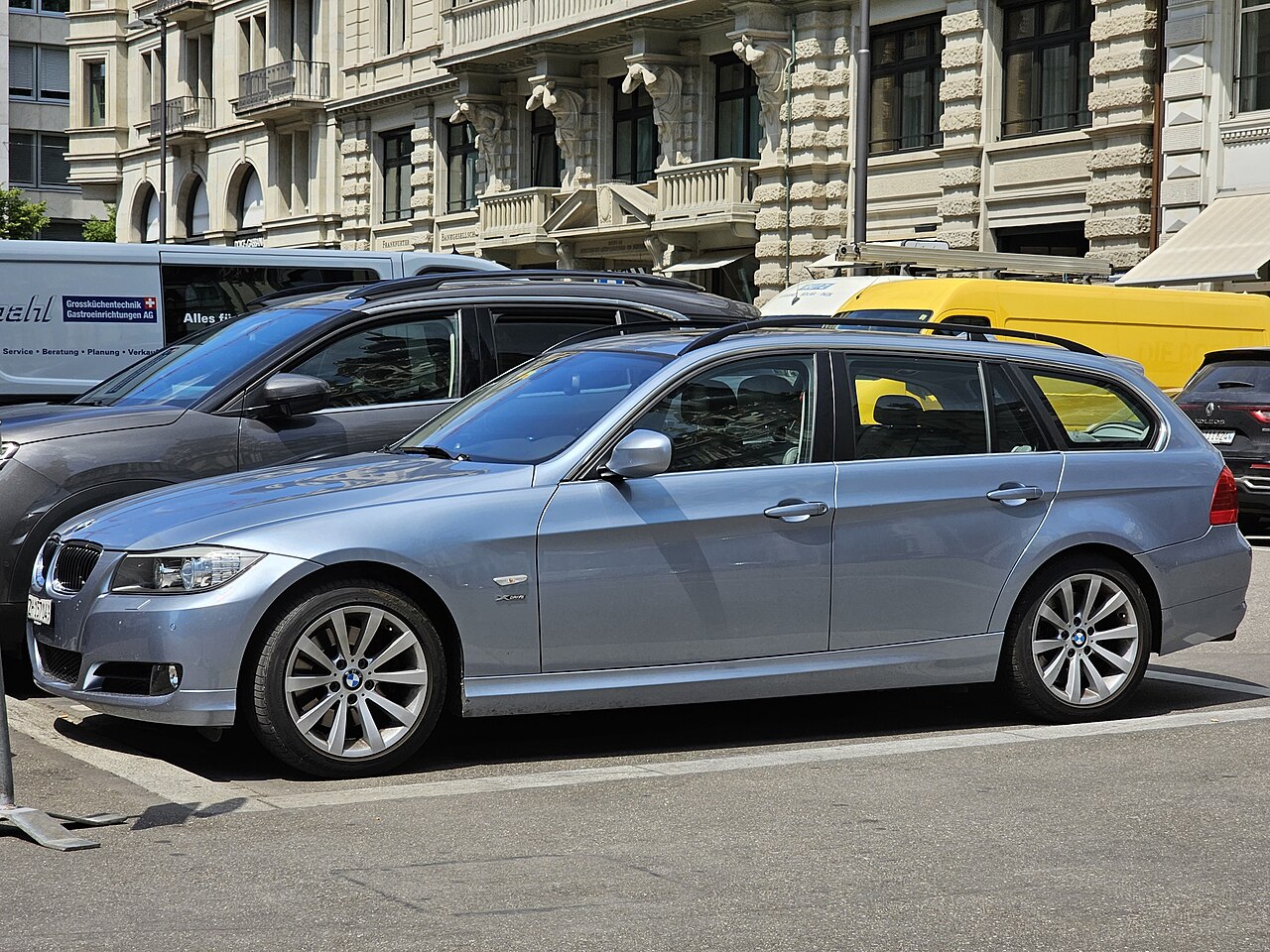
The 325d is the M57 diesel version of the BMW 3 Series wagon (E91), sold 2006–2010 with 197 PS and manual or automatic. Manageable at level 2. The M57 has no failure mode that ends the engine; what fails is bolted to the outside: swirl flaps, turbo actuator, DPF. 18 failure modes are recorded against its engine, gearbox, chassis and shared components. Prices on this page are illustrative placeholders rather than a sourced market sample. See the methodology for how the bands are derived.
Power197–204 PS
Torque400–430 Nm
Years2006–2012
Fueldiesel
DriveRWD
EnginesM57 / N57
325d M57 · biggest risks

Ranked by probability × repair cost. 18 recorded in total.

63Demands diligence
  1. "Lifetime" fluid neglect€400€2,500partly checkable
  2. Dual-mass flywheel and clutch wear€900€1,600checkable
  3. DPF clogging and forced regeneration€250€1,800partly checkable

Risk level −11 · Likely spend vs price −26 · all issues →

325d N57 · biggest risks

Ranked by probability × repair cost. 19 recorded in total.

52Demands diligence
  1. "Lifetime" fluid neglect€400€2,500partly checkable
  2. Dual-mass flywheel and clutch wear€900€1,600checkable
  3. DPF clogging and forced regeneration€250€1,800partly checkable

Risk level −22 · Likely spend vs price −26 · all issues →

325d M57 · system by system9 systems reviewed · 0 with no recurring fault reported
325d N57 · system by system9 systems reviewed · 1 with no recurring fault reported
EnginewatchRear timing chain wear, €1,800–€3,000.+2 more in this system
Fuel system✓ clearNo recurring fault reported for this system on this engine.
Emissions⚠ attentionDPF clogging and forced regeneration, €250–€1,800.+1 more in this system
Transmission⚠ attention"Lifetime" fluid neglect, €400–€2,500.+3 more in this system
ElectricswatchFootwell module (FRM) failure, €150–€700.+2 more in this system
Suspension & brakeswatchFront control arm bushing wear, €300–€700.+2 more in this system

Which engine

EngineYearsFaceliftPowerTorqueRiskIssuesGood buyIn one line
M572006–2010both197 PS400 NmR218€5,500Six-cylinder diesel durability at four-cylinder money. One of the best-value cars in the range.
N572010–2012LCI204 PS430 NmR319€7,650A late, quiet, efficient six-cylinder diesel, the most modern engine in the range and a sensible daily car.
Engine M57

325d M57D30TU2 / M57D30TOP 2006–2010

The strongest engine in the range. Bottom ends routinely pass 400,000 km; everything that fails on it's bolted to the outside and priced accordingly.

BuyGood buy at€5,500€4,650€9,450
R2 Manageable18 issues

Risk 2, Manageable. The M57 has no failure mode that ends the engine; what fails is bolted to the outside: swirl flaps, turbo actuator, DPF.

Pre-facelift or facelift, this engine spans both

The same badge either side of the changeover. Bands are split at the facelift year from the generation record.

PhaseYearsLowAverageHighGood buyWhat differs
pre Pre-facelift2006–2007€4,650€6,350€8,700€5,500The specification the car launched with.
LCI Facelift (LCI)2008–2010€5,100€6,950€9,450€6,050Revised lights and bumpers; N53 replaced N52 in most European markets; N57 replaced M57 in the 330d

Known issues, ranked by expected cost

Faults recorded against this engine, its components and its chassis, ranked by likelihood × repair cost. Costs are indicative ranges with a stated labour basis.

"Lifetime" fluid neglectZF 6HP19 / 6HP21 six-speed automatic€400–€2,500
Harsh or hunting shifts, a shunt between second and third, delayed engagement when cold. BMW declared the fluid a lifetime fill. It's not. Fluid degrades, the valve body wears, and the box eventually fails.
Check: Drive it from cold through every gear, then in manual mode. Ask when the fluid was last changed. "It's sealed for life" means never, and you should price a service in.
TransmissioncommonPartly detectableevidence: documented120200k km
Dual-mass flywheel and clutch wearGetrag six-speed manual€900–€1,600
Rattle at idle with the clutch up that disappears when you press it, judder on pull-away, gearbox rumble. The dual-mass flywheel's springs wear. Diesels and tuned petrols wear them faster.
Check: Idle in neutral with the clutch up and listen, then press the clutch. A rattle that stops when you press is the flywheel. Also check for judder pulling away in first.
TransmissioncommonDetectable at viewingevidence: documented130250k km
Warning light, limp mode, oil level rising above the maximum mark from fuel dilution. The filter needs sustained hot running to regenerate. A car used for short urban trips never completes a regeneration cycle.
Check: Read the DPF soot load and the distance since the last regeneration on a scan tool, and check the engine oil level and smell it for diesel. Ask what the car was used for. A short-trip city diesel is the wrong car regardless of mileage.
EmissionscommonPartly detectableevidence: documented120250k km
Front control arm bushing wearE9x chassis€300–€700
Knocking over bad surfaces, vague or wandering steering, uneven front tyre wear, steering shimmy under braking. The front lower arm bushings are a known wear item on this chassis and go well before the ball joints.
Check: Drive over a rough road at low speed with the windows down and listen. Check the inside edges of the front tyres for feathering.
SuspensionuniversalDetectable at viewingevidence: documented80150k km
Variable-vane turbo actuator stickingvariable-vane turbo€400–€1,200
Sudden loss of power on a hard pull, limp mode that clears on restart, underboost or overboost codes. Soot binds the variable vanes or the actuator linkage seizes.
Check: Do a full-throttle pull in third from 1,500 rpm to the limiter. Hesitation or a drop into limp mode is this fault. Do this twice.
Turbo & intakecommonDetectable at viewingevidence: documented130250k km
Damp headlining, water in the footwells, musty smell, and then electrical faults as modules get wet. The panoramic roof's drain channels block with debris and the water finds its way into the cabin instead.
Check: Lift the boot floor and the front carpet edges and feel for damp. Check the spare wheel well for standing water. A wet footwell on this chassis eventually means a failed module.
Body & corrosioncommonDetectable at viewingevidence: documented
Harsh ride, vibration at speed, slow punctures. Stiff-sidewall run-flats transmit impacts straight into the rim, and these alloys crack rather than bend.
Check: Inspect the inner rim edge of every wheel for cracks and hairline splits, not just the face for kerbing. Budget for a set of conventional tyres; most owners switch and the ride improves markedly.
SuspensioncommonDetectable at viewingevidence: documented
Bubbling at the rear arch lip, scaling on subframe mounting points and rear suspension components. Age plus road salt. This generation isn't a notorious rotter, but nothing from 2005–2013 is immune in a salted market.
Check: Put it on a lift and look at the rear subframe mounting points and the arch lips from behind. Largely a non-issue on cars from southern Europe, a real one on northern and Baltic cars.
Body & corrosionoccasionalDetectable at viewingevidence: documented

Ranked by probability × repair cost, not by how loudly a failure is discussed. Inherited from the engine, gearbox, chassis and shared components, each written once. All 18 issues in full →

Pre-purchase inspection

The same issue records, reordered into the sequence you can actually check them in: cold start, static, drive, paperwork.

18 checks · saved in this browser ·

1Static checksEngine off, ideally on a lift.

2On the driveInclude low-speed manoeuvring, not just an open road.

3PaperworkOn these cars the folder is most of the value.

4OBD scanMandatory. A seller who refuses a scan has answered the question.

Mileage and servicing

What the odometer does and doesn't tell you here, plus the service items whose neglect causes the expensive failures above.

The M57 bottom end routinely passes 400,000 km. So treat 250,000 km with history as normal rather than alarming. What ages is the turbo actuator, the swirl flap spindles and the DPF; a car used for short journeys will have all three problems regardless of what the odometer says.

Service itemIntervalCost
Swirl flaps
The only failure here capable of destroying the engine, and it's avoidable
preventive€400–900
Engine oil
Turbo bearings and fuel dilution from regenerations
10,000–15,000 km€100–150
Automatic fluid + pan
The torque of a diesel makes fluid neglect worse, not better
80,000–100,000 km€400–600

What to pay

What this engine sells for, against the median of every engine in the chassis. All figures are illustrative placeholders. See the basis chips.

Enter an asking price to get a verdict against this variant's band: cheap, fair, good buy or overpriced.

United States vs Europe

1 EUR = 1.08 USD ·
🇪🇺 Europe · EUR€5,500band €4,650€9,450
🇺🇸 United StatesNot sold325d M57 was never a US-market car
What that meansNo US band exists to compare. Any car you find there's a private import, parts and specialist knowledge are thinner, and the price says more about import cost than about the market.

US figures are the EU band converted at a stated rate. No US market differential is modelled: we hold no sourced US asking prices, and inventing one would be worse than saying so. What the comparison does show for real is availability. Most of this range was never sold in the US.

  • ModelBMW 3 Series 325d
  • ChassisE91
  • EngineM57
  • Years2006–2010
  • MarketCentral EU
  • Windowrolling 12 months to 2026-07
€6k€8kE91 median, all 17 engines €5,850Pre-faceliftPre-facelift: low €4,650, good buy €5,500, average €6,350, high €8,700€6,350€4,650€8,700€5,500Facelift (LCI)Facelift (LCI): low €5,100, good buy €6,050, average €6,950, high €9,450€6,950€5,100€9,450€6,050
Good buy at or under the marker · Median asking price · bar spans the 10th to 90th percentile · dashed line is the e91 median, all 17 engines

Good buy isn't the same as cheapest. The good-buy figure assumes the known failure items are either done with receipts or verifiably not yet due. Full breakdown by facelift phase →

Buyer notes

Our judgement, kept separate from the records it's built on.

Our read, not a record
The 325d is the quiet answer for anyone who wants the six-cylinder feel without the six-cylinder fuel bill or the N47's chain anxiety. It's a detuned 330d, which means the same durable engine with a smaller turbo and less software. It won't thrill you. 197 PS in a 1,600 kg car is adequate rather than quick, but it will cover 500 km on a tank, tolerate huge mileages, and never present you with a bill that exceeds its own value. Remove or replace the swirl flaps if the history doesn't show it, keep the oil fresh, and drive it far enough to keep the DPF happy.

Everything above this line comes from the issue and specification records. This paragraph is our judgement on top of them. See how we reach it.

Full specification

Manufacturer figures for this engine and body, as recorded in the variant and engine data.

Engine codeM57D30TU2 / M57D30TOP
ConfigurationI6, turbodiesel (twin-turbo in 335d) · 2993 cc
Fuel / injectiondiesel · common rail
Model years2006–2010
Facelift phaseSold either side of the 2008 facelift, 2006–2007 pre, 2008–2010 LCI
Power / torque197 PS · 400 Nm
Transmissions6-speed manual · 6-speed automatic (ZF)
Gearbox familiesGetrag six-speed manual · ZF 6HP19 / 6HP21 six-speed automatic
DrivetrainRWD
Economy (real-world)6–7.5 l/100 km mixed
MarketsEU
Engine N57

325d N57D30 2010–2012

The M57's successor: quieter, cleaner, a little more powerful, and slightly more complicated. Shares the rear chain layout of the N47 with a far better record.

BuyGood buy at€7,650€6,450€11,800
R3 Demands diligence19 issues

Risk 3, Demands diligence. Shares the rear-chain architecture of the N47 with a much lower failure rate, plus the usual diesel emissions hardware.

Known issues, ranked by expected cost

Faults recorded against this engine, its components and its chassis, ranked by likelihood × repair cost. Costs are indicative ranges with a stated labour basis.

"Lifetime" fluid neglectZF 6HP19 / 6HP21 six-speed automatic€400–€2,500
Harsh or hunting shifts, a shunt between second and third, delayed engagement when cold. BMW declared the fluid a lifetime fill. It's not. Fluid degrades, the valve body wears, and the box eventually fails.
Check: Drive it from cold through every gear, then in manual mode. Ask when the fluid was last changed. "It's sealed for life" means never, and you should price a service in.
TransmissioncommonPartly detectableevidence: documented120200k km
Dual-mass flywheel and clutch wearGetrag six-speed manual€900–€1,600
Rattle at idle with the clutch up that disappears when you press it, judder on pull-away, gearbox rumble. The dual-mass flywheel's springs wear. Diesels and tuned petrols wear them faster.
Check: Idle in neutral with the clutch up and listen, then press the clutch. A rattle that stops when you press is the flywheel. Also check for judder pulling away in first.
TransmissioncommonDetectable at viewingevidence: documented130250k km
Warning light, limp mode, oil level rising above the maximum mark from fuel dilution. The filter needs sustained hot running to regenerate. A car used for short urban trips never completes a regeneration cycle.
Check: Read the DPF soot load and the distance since the last regeneration on a scan tool, and check the engine oil level and smell it for diesel. Ask what the car was used for. A short-trip city diesel is the wrong car regardless of mileage.
EmissionscommonPartly detectableevidence: documented120250k km
Rear timing chain wearN57D30€1,800–€3,000
Rattle from the bulkhead end of the engine on start-up, worst when cold. Same rear-mounted chain architecture as the four-cylinder N47, but with a materially lower failure rate on the six.
Check: Cold start. Listen at the bulkhead. The six isn't the four. This is a real but much rarer failure, and it shouldn't by itself put you off the engine.
EngineoccasionalDetectable at viewingevidence: documented180300k km
Front control arm bushing wearE9x chassis€300–€700
Knocking over bad surfaces, vague or wandering steering, uneven front tyre wear, steering shimmy under braking. The front lower arm bushings are a known wear item on this chassis and go well before the ball joints.
Check: Drive over a rough road at low speed with the windows down and listen. Check the inside edges of the front tyres for feathering.
SuspensionuniversalDetectable at viewingevidence: documented80150k km
Variable-vane turbo actuator stickingvariable-vane turbo€400–€1,200
Sudden loss of power on a hard pull, limp mode that clears on restart, underboost or overboost codes. Soot binds the variable vanes or the actuator linkage seizes.
Check: Do a full-throttle pull in third from 1,500 rpm to the limiter. Hesitation or a drop into limp mode is this fault. Do this twice.
Turbo & intakecommonDetectable at viewingevidence: documented130250k km
Damp headlining, water in the footwells, musty smell, and then electrical faults as modules get wet. The panoramic roof's drain channels block with debris and the water finds its way into the cabin instead.
Check: Lift the boot floor and the front carpet edges and feel for damp. Check the spare wheel well for standing water. A wet footwell on this chassis eventually means a failed module.
Body & corrosioncommonDetectable at viewingevidence: documented
Harsh ride, vibration at speed, slow punctures. Stiff-sidewall run-flats transmit impacts straight into the rim, and these alloys crack rather than bend.
Check: Inspect the inner rim edge of every wheel for cracks and hairline splits, not just the face for kerbing. Budget for a set of conventional tyres; most owners switch and the ride improves markedly.
SuspensioncommonDetectable at viewingevidence: documented

Ranked by probability × repair cost, not by how loudly a failure is discussed. Inherited from the engine, gearbox, chassis and shared components, each written once. All 19 issues in full →

Pre-purchase inspection

The same issue records, reordered into the sequence you can actually check them in: cold start, static, drive, paperwork.

19 checks · saved in this browser ·

1Cold startYou get one. If the engine is warm when you arrive, come back another day.

2Static checksEngine off, ideally on a lift.

3On the driveInclude low-speed manoeuvring, not just an open road.

4PaperworkOn these cars the folder is most of the value.

5OBD scanMandatory. A seller who refuses a scan has answered the question.

Mileage and servicing

What the odometer does and doesn't tell you here, plus the service items whose neglect causes the expensive failures above.

Late cars, so mileage tends to be moderate. Then listen at the bulkhead on cold start anyway: the six's chain is far more hard-wearing than the four's, but it's the same layout and worth ten seconds of attention. Check DPF and EGR history.

Service itemIntervalCost
EGR cooler recall
Issued over a fire risk and free to have carried out
check by VINfree
Engine oil
Chain wear and turbo longevity
10,000–15,000 km, not long-life€100–150
DPF usage pattern
This engine needs sustained hot running; a city-only life ruins it
ongoing€250–1,800

What to pay

What this engine sells for, against the median of every engine in the chassis. All figures are illustrative placeholders. See the basis chips.

Enter an asking price to get a verdict against this variant's band: cheap, fair, good buy or overpriced.

United States vs Europe

1 EUR = 1.08 USD ·
🇪🇺 Europe · EUR€7,650band €6,450€11,800
🇺🇸 United StatesNot sold325d N57 was never a US-market car
What that meansNo US band exists to compare. Any car you find there's a private import, parts and specialist knowledge are thinner, and the price says more about import cost than about the market.

US figures are the EU band converted at a stated rate. No US market differential is modelled: we hold no sourced US asking prices, and inventing one would be worse than saying so. What the comparison does show for real is availability. Most of this range was never sold in the US.

  • ModelBMW 3 Series 325d
  • ChassisE91
  • EngineN57
  • Years2010–2012
  • MarketCentral EU
  • Windowrolling 12 months to 2026-07
€6k€8k€10k€12kE91 median, all 17 engines €5,850 (off scale)Facelift (LCI)Facelift (LCI): low €6,450, good buy €7,650, average €8,800, high €11,800€8,800€6,450€11,800€7,650
Good buy at or under the marker · Median asking price · bar spans the 10th to 90th percentile · dashed line is the e91 median, all 17 engines

Good buy isn't the same as cheapest. The good-buy figure assumes the known failure items are either done with receipts or verifiably not yet due. Full breakdown by facelift phase →

Buyer notes

Our judgement, kept separate from the records it's built on.

Our read, not a record
The N57 arrived with the facelift and is the engine you want if you plan to actually use the car every day. It's quieter than the M57, cleaner, marginally more powerful, and returns figures a petrol six can't approach. In exchange it has more emissions hardware to maintain and the rear-chain layout that made its four-cylinder sibling notorious, though on the six the failure rate is very much lower and it shouldn't scare you off. So verify the EGR cooler recall by VIN, keep the oil intervals short, and drive it far enough to regenerate the filter properly.

Everything above this line comes from the issue and specification records. This paragraph is our judgement on top of them. See how we reach it.

Full specification

Manufacturer figures for this engine and body, as recorded in the variant and engine data.

Engine codeN57D30
ConfigurationI6, turbodiesel · 2993 cc
Fuel / injectiondiesel · common rail
Model years2010–2012
Facelift phaseFacelift (LCI) only, from 2008
Power / torque204 PS · 430 Nm
Transmissions6-speed manual · 6-speed automatic (ZF)
Gearbox familiesGetrag six-speed manual · ZF 6HP19 / 6HP21 six-speed automatic
DrivetrainRWD
Economy (real-world)5.5–7 l/100 km mixed
MarketsEU