530d M57

The strongest engine in the range. Bottom ends routinely pass 400,000 km; everything that fails on it's bolted to the outside and priced accordingly.

Overview

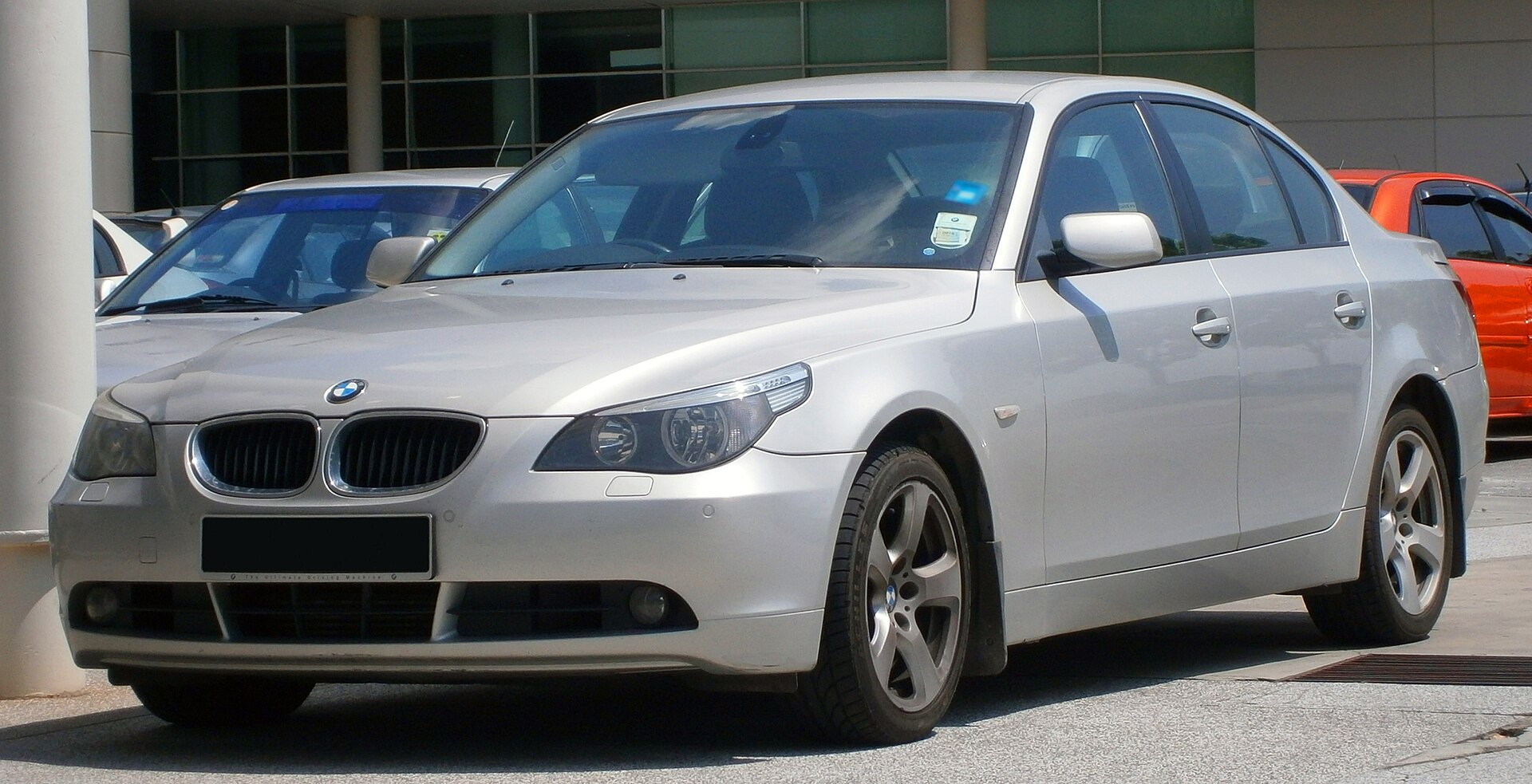
The 530d is the M57 diesel version of the BMW 5 Series sedan (E60), sold 2003–2010 with 235 PS and manual or automatic. Manageable at level 2. The strongest engine in the range with no fault that ends it, so the spend is swirl flaps, the turbo actuator and cooling. 19 failure modes are recorded against its engine, gearbox, chassis and shared components. Prices on this page are illustrative placeholders rather than a sourced market sample. See the methodology for how the bands are derived.
Power235 PS
Torque500 Nm
Years2003–2010
Fueldiesel
DriveRWD
EnginesM57
Biggest risks

Ranked by probability × repair cost. 19 recorded in total.

63Demands diligence
  1. "Lifetime" fluid neglect€400€2,500partly checkable
  2. Dual-mass flywheel and clutch wear€900€1,600checkable
  3. DPF clogging and forced regeneration€250€1,800partly checkable

Risk level −11 · Likely spend vs price −26 · all issues →

System by system9 systems reviewed · 0 with no recurring fault reported

Pre-facelift or facelift, this engine spans both

The same badge either side of the changeover. Bands are split at the facelift year from the generation record.

PhaseYearsLowAverageHighGood buyWhat differs
pre Pre-facelift2003–2006€5,000€7,800€12,500€6,400The specification the car launched with.
LCI Facelift (LCI)2007–2010€5,450€8,500€13,650€7,000Revised lights, bumpers and iDrive; N53 replaced the N52 and M54 in most European petrol sixes; N54 twin-turbo arrived in the 535i; N47 replaced the M47 in the 520d

Known issues, ranked by expected cost

Faults recorded against this engine, its components and its chassis, ranked by likelihood × repair cost. Costs are indicative ranges with a stated labour basis.

"Lifetime" fluid neglectZF 6HP19 / 6HP21 six-speed automatic€400–€2,500
Harsh or hunting shifts, a shunt between second and third, delayed engagement when cold. BMW declared the fluid a lifetime fill. It's not. Fluid degrades, the valve body wears, and the box eventually fails.
Check: Drive it from cold through every gear, then in manual mode. Ask when the fluid was last changed. "It's sealed for life" means never, and you should price a service in.
TransmissioncommonPartly detectableevidence: documented120200k km
Dual-mass flywheel and clutch wearGetrag six-speed manual€900–€1,600
Rattle at idle with the clutch up that disappears when you press it, judder on pull-away, gearbox rumble. The dual-mass flywheel's springs wear. Diesels and tuned petrols wear them faster.
Check: Idle in neutral with the clutch up and listen, then press the clutch. A rattle that stops when you press is the flywheel. Also check for judder pulling away in first.
TransmissioncommonDetectable at viewingevidence: documented130250k km
Warning light, limp mode, oil level rising above the maximum mark from fuel dilution. The filter needs sustained hot running to regenerate. A car used for short urban trips never completes a regeneration cycle.
Check: Read the DPF soot load and the distance since the last regeneration on a scan tool, and check the engine oil level and smell it for diesel. Ask what the car was used for. A short-trip city diesel is the wrong car regardless of mileage.
EmissionscommonPartly detectableevidence: documented120250k km
Front control arm bushing wearE9x chassis€300–€700
Knocking over bad surfaces, vague or wandering steering, uneven front tyre wear, steering shimmy under braking. The front lower arm bushings are a known wear item on this chassis and go well before the ball joints.
Check: Drive over a rough road at low speed with the windows down and listen. Check the inside edges of the front tyres for feathering.
SuspensionuniversalDetectable at viewingevidence: documented80150k km
Variable-vane turbo actuator stickingvariable-vane turbo€400–€1,200
Sudden loss of power on a hard pull, limp mode that clears on restart, underboost or overboost codes. Soot binds the variable vanes or the actuator linkage seizes.
Check: Do a full-throttle pull in third from 1,500 rpm to the limiter. Hesitation or a drop into limp mode is this fault. Do this twice.
Turbo & intakecommonDetectable at viewingevidence: documented130250k km
Active steering fault5 Series platform€800–€2,500
A steering warning light, a message about the active steering, and in some cases a stiffer or unpredictable rack response. Where active steering was optioned, the actuator and its control unit can fail. Cars without the option are unaffected, so establish which system the car has before pricing the risk.
Check: Check for a steering warning at start-up, turn lock to lock while stationary, and confirm from the options list whether active steering is even fitted.
SuspensionoccasionalDetectable at viewingevidence: documented120220k km
Module and electronics failures5 Series platform€150–€1,200
Warning lights that come and go, iDrive freezing or rebooting, comfort access refusing to open the doors, and occasional non-starts. The E60 carries far more electronic modules than the E90 and they're now old. A weak battery is the most common root cause, since low voltage upsets several modules at once, though genuine module and connector failures do happen.
Check: Scan every module rather than just the engine, cycle the iDrive and the comfort access, and check whether the battery has been replaced and registered.
ElectricalcommonPartly detectableevidence: documented120220k km
Harsh ride, vibration at speed, slow punctures. Stiff-sidewall run-flats transmit impacts straight into the rim, and these alloys crack rather than bend.
Check: Inspect the inner rim edge of every wheel for cracks and hairline splits, not just the face for kerbing. Budget for a set of conventional tyres; most owners switch and the ride improves markedly.
SuspensioncommonDetectable at viewingevidence: documented

Ranked by probability × repair cost, not by how loudly a failure is discussed. Inherited from the engine, gearbox, chassis and shared components, each written once. All 19 issues in full →

Pre-purchase inspection

The same issue records, reordered into the sequence you can actually check them in: cold start, static, drive, paperwork.

19 checks · saved in this browser ·

1Cold startYou get one. If the engine is warm when you arrive, come back another day.

2Static checksEngine off, ideally on a lift.

3On the driveInclude low-speed manoeuvring, not just an open road.

4PaperworkOn these cars the folder is most of the value.

5OBD scanMandatory. A seller who refuses a scan has answered the question.

Mileage and servicing

What the odometer does and doesn't tell you here, plus the service items whose neglect causes the expensive failures above.

Mileage is close to irrelevant against history. A documented 350,000 km 530d is a safer purchase than an unknown 150,000 km one, because everything that wears here is external and visible in receipts.

Service itemIntervalCost
Engine oil
Everything about this engine's longevity starts here
15,000 km or annually€110–160
Swirl flaps
The one failure that can destroy the engine
roughly 150,000 km€250–500
Automatic fluid + pan
The ZF wants a service despite the lifetime claim
80,000–100,000 km€400–600

What to pay

What this engine sells for, against the median of every engine in the chassis. All figures are illustrative placeholders. See the basis chips.

Enter an asking price to get a verdict against this variant's band: cheap, fair, good buy or overpriced.

United States vs Europe

1 EUR = 1.08 USD ·
🇪🇺 Europe · EUR€6,400band €5,000€13,650
🇺🇸 United StatesNot sold530d M57 was never a US-market car
What that meansNo US band exists to compare. Any car you find there's a private import, parts and specialist knowledge are thinner, and the price says more about import cost than about the market.

US figures are the EU band converted at a stated rate. No US market differential is modelled: we hold no sourced US asking prices, and inventing one would be worse than saying so. What the comparison does show for real is availability. Most of this range was never sold in the US.

  • ModelBMW 5 Series 530d
  • ChassisE60
  • EngineM57
  • Years2003–2010
  • MarketCentral EU
  • Windowrolling 12 months to 2026-07
€5k€10kE60 median, all 8 engines €6,650Pre-faceliftPre-facelift: low €5,000, good buy €6,400, average €7,800, high €12,500€7,800€5,000€12,500€6,400Facelift (LCI)Facelift (LCI): low €5,450, good buy €7,000, average €8,500, high €13,650€8,500€5,450€13,650€7,000
Good buy at or under the marker · Median asking price · bar spans the 10th to 90th percentile · dashed line is the e60 median, all 8 engines

Good buy isn't the same as cheapest. The good-buy figure assumes the known failure items are either done with receipts or verifiably not yet due. Full breakdown by facelift phase →

Buyer notes

Our judgement, kept separate from the records it's built on.

Our read, not a record
The 530d is why people still buy E60s. It has the torque to make a heavy saloon feel effortless, it returns figures a petrol six can't approach, and the M57 itself is about as close to unbreakable as a modern diesel gets. What it asks for is ordinary: fresh oil, attention to the swirl flaps, and a gearbox service the label says you don't need. Get a documented one, ideally a Touring, and you have a car that will cover enormous distances without drama.

Everything above this line comes from the issue and specification records. This paragraph is our judgement on top of them. See how we reach it.

Full specification

Manufacturer figures for this engine and body, as recorded in the variant and engine data.

Engine codeM57D30TU2 / M57D30TOP
ConfigurationI6, turbodiesel (twin-turbo in 335d) · 2993 cc
Fuel / injectiondiesel · common rail
Model years2003–2010
Facelift phaseSold either side of the 2007 facelift, 2003–2006 pre, 2007–2010 LCI
Power / torque235 PS · 500 Nm
Transmissions6-speed manual · 6-speed automatic (ZF)
Gearbox familiesGetrag six-speed manual · ZF 6HP19 / 6HP21 six-speed automatic
DrivetrainRWD
Economy (real-world)6–8 l/100 km mixed
MarketsEU